Precise fault localization
Visualize and pinpoint exactly where a sound emergence comes from, on a blade, the rotor or the nacelle, using advanced acoustic imaging.

Cornis ground-based acoustic imaging turns sound into a picture. A single acoustic antenna pinpoints where a sound emergence comes from on the machine, whether a blade, the rotor or the nacelle, and tells a defective part from a healthy one. It works while your turbines keep running. A blade-tip whistling is one example of the faults it reveals.
The standard method places a single microphone next to one machine, which means shutting down the whole wind farm to study one turbine at a time. Cornis works differently. A single acoustic antenna, made of many microphones, acts as a spatial filter and isolates one turbine among the others in operation. You keep producing while you diagnose.
Targeted diagnosis. Go straight to the machine with the sound emergence.
No full shutdown. The farm keeps producing while you inspect one turbine.
Fast response. Answer a complaint or a curtailment decision as soon as the measurement is done.
You stop the whole farm to study one machine at a time.
One turbine diagnosed while the others keep producing.
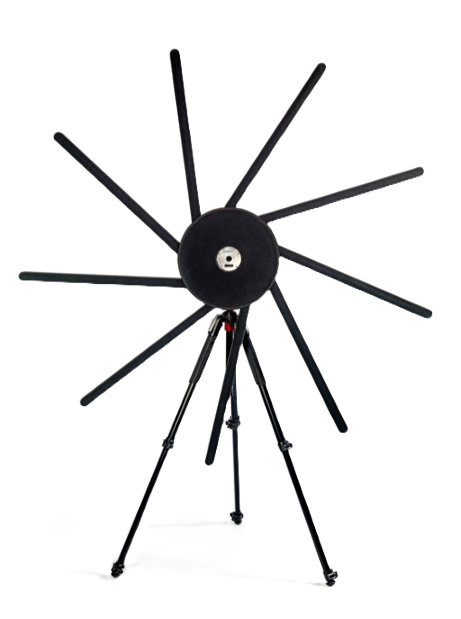
No network of microphones to lay out across the site. One acoustic antenna, made of many microphones, recreates the full spatial array on its own. Set it on the ground, point it at the machine, and record while the turbine keeps running.
A cutting-edge Cornis solution to precisely detect, locate and diagnose acoustic faults on wind turbines. Designed to find a fault that is invisible to the eye and to drone inspection, answer noise complaints, guide curtailment and de-curtailment, and sharpen maintenance planning.
Visualize and pinpoint exactly where a sound emergence comes from, on a blade, the rotor or the nacelle, using advanced acoustic imaging.
Reveal acoustic emergences that leave no visible trace, such as a whistling at the blade tip, and find the source others cannot see.
A single antenna set on the ground, with no close access to the turbine. Ideal for difficult or hazardous environments, onshore and offshore.
Detect and assess noise issues reported by nearby communities, and back your answer with documented, located evidence.
Confirm which machine and which fault drive the noise, to curtail or release a turbine or the whole farm with confidence.
Track acoustic trends over time to catch early warning signs, optimize schedules and extend turbine lifespan.
A sound emergence tells you something is wrong, but not where. It can come from a blade, the rotor or the nacelle, and it often leaves no visible trace for the eye or a drone. Acoustic imaging turns it into a picture and points to the exact source.
One antenna on the ground captures the machine's sound field and maps it onto the turbine, so the source is obvious at a glance. No climbing, no guesswork.
Field example · a blade-tip whistling
A ground-based acoustic imaging campaign turns what you hear into what you can see and act on, while the turbine keeps running.
A single acoustic antenna is set up on the ground at the base of the turbine. No close or intrusive access is needed.
The machine's sound field is recorded in operation, capturing any emergence over full blade passages.
Sound is reconstructed into an acoustic image and overlaid on the turbine to reveal the dominant source.
The source is located on the blade, rotor or nacelle and characterized. A clear basis for complaints, curtailment and repair.
Want the full detail of the offer?
Product sheet (PDF)
The anomaly is mapped directly onto the turbine, turning a vague noise complaint into a precise, documented finding you can act on.
A ground-based acoustic imaging chain engineered by Cornis to isolate a single source, precisely, from a compact footprint.
One acoustic antenna acts as a spatial filter and localizes the source on the machine, even among turbines in operation. No ground network to deploy.
A pseudo-time formulation suited to slow-rotating blades, delivering real-time maps filtered within the frequency band of interest.
GPS distance to the tower and an inertial unit record the array's attitude (yaw, pitch, roll) to keep the geometry accurate.
Advanced processing narrows the display dynamic range to isolate one dominant source, sharply refining localization.
Measured from the base and in front of the turbine, at distances up to 100 m, for the best view over the whole blade span.
Autonomous, self-powered acquisition designed to deploy across configurations, with or without blade serrations.
Precise, non-intrusive inspection for better turbine health and reduced environmental impact.
Turn a subjective noise report into a documented, located finding you can share with communities and authorities.
Know which machine and which fault to act on, to curtail or release a turbine or the whole farm on solid evidence.
A cleaner acoustic footprint for your wind farm, with maintenance targeted only where it is needed.
Talk to the Cornis team about acoustic inspection by image for your wind farm.
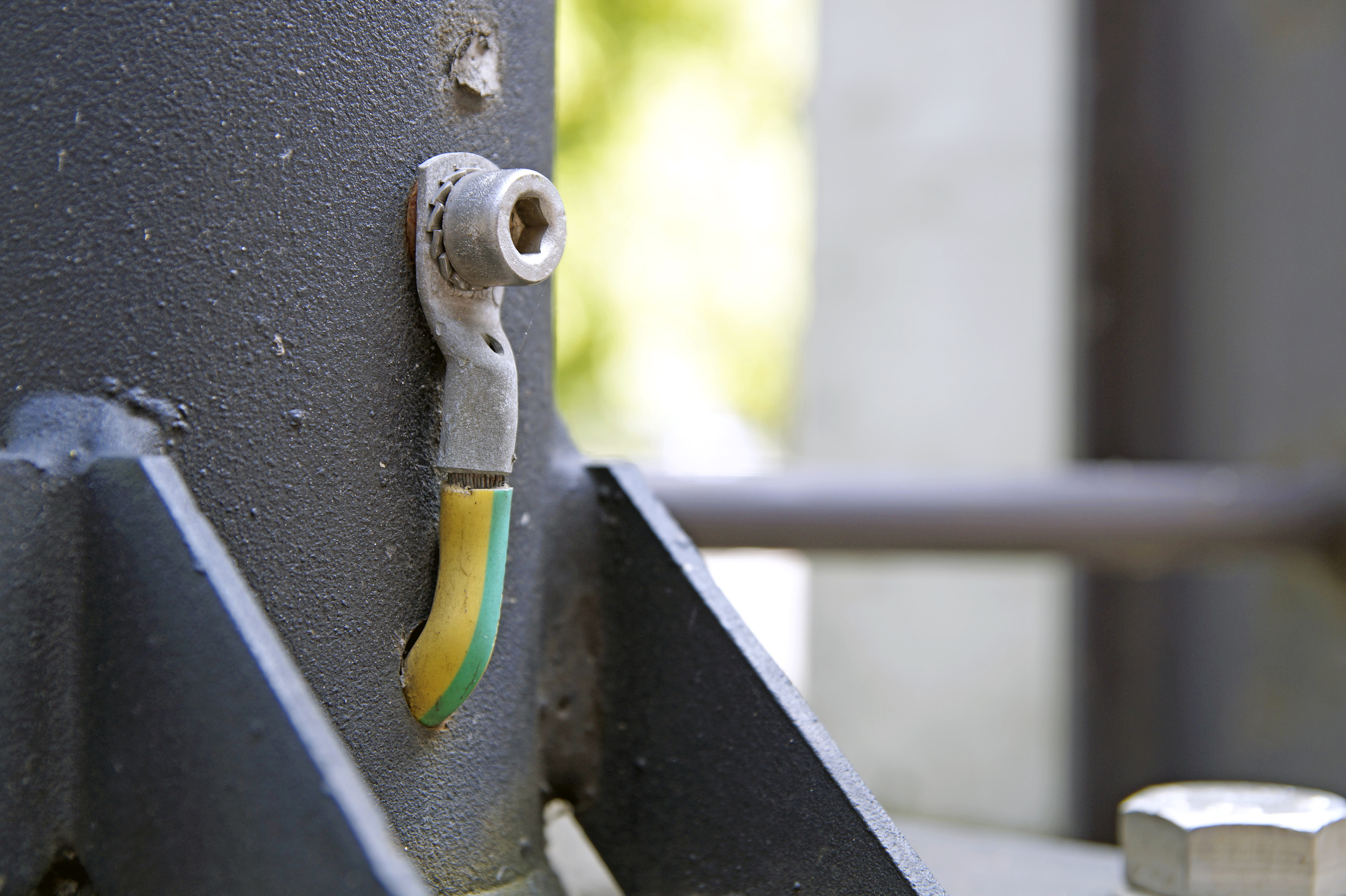
Inspecting the continuity of a lightning protection system (LPS) using drones requires millimeter-level precision, particularly when it comes to protection...
We often hear the same "good" reasons for avoiding regular wind turbine blade inspections. But are they really justified?
Lightning is one of the most underestimated risks for wind farms. Despite their robust design, turbines remain exposed to stormy...